What an AI Due Diligence Agent Actually Produces (and How to Trust It)
Inside the output of an AI due diligence agent — what it produces, how the governance layer makes it verifiable, and why that's what lets a firm trust it.
Daman Kaur
A decade building cloud and AI infrastructure at Microsoft and HPE taught me how the world's largest enterprises think about trust, compliance and scale. I left to build the missing layer: AI you can prove. Today I'm the founder of LegalAI Space, where a whole team of AI agents does real legal work — and every output ships with a verified citation trail and a signed record a regulator can read. Starting with law, where unverified AI is career-ending.

The path from enterprise to founder
Engineering degree from BITS Pilani, then a decade at Microsoft and HPE — building cloud and AI infrastructure serving Fortune 500 companies. Learned how enterprises think about trust, compliance, and scale — lessons most startup founders never get.
After leaving Microsoft, I spent two years building experimental AI tools to understand what LLMs could and couldn't do. Markdown Converters processed 20,000+ documents — and legal industry users kept showing up. PaperAI taught me that AI outputs need structured human oversight, not blind trust. Every user asked the same question: "Can we prove this AI output is correct?"
Motherhood taught me something no corporate role ever did — how to build with fierce clarity about what matters. An executive product management programme at IIM Lucknow sharpened the business lens. I left Microsoft, not despite becoming a mother, but because of the perspective and discipline it gave me. Understanding what is important and going for it irrespective of how difficult it is. Somewhere in between, I also built DrawInkPaper — free drawing tutorials for kids, because I like art and wanted to share it.
That question became the founding thesis for LegalAI Space — a governance platform purpose-built for legal teams. A whole team of specialist AI agents does the real work — research, contract review, due diligence, compliance — and one governance layer checks every step: conflicts, jurisdiction and client data cleared before a run begins, every citation re-fetched and verified against the source, and a signed, reproducible record a compliance officer can hand to a regulator. I'm onboarding UK and EU firms now. Starting with law, where the consequences of unverified AI are career-ending.
From document intelligence to governed AI agents — each step built on the last.
AI agents that do the work — governance that proves it
Other legal AI makes fee-earners faster. LegalAI Space lets the firm prove the work was done properly. Fifteen specialist agents handle research, contract review, due diligence, compliance and more — each governed by the same pipeline: conflict, jurisdiction and PII checks before a run starts; every citation re-fetched and verified against BAILII, legislation.gov.uk and EUR-Lex; and a signed, tamper-evident record for the SRA, a client, or the EU AI Act. Built for UK and EU firms, built to scale globally.
ResearchContractsDue DiligenceComplianceHorizon ScanningDocument Review+9 more
Every agent output is independently verified against authoritative legal databases and delivered with a full audit trail.
On verifiable AI, legal-AI governance, and building in public — written for the compliance officers, partners and builders now accountable for AI they can't yet prove.
Inside the output of an AI due diligence agent — what it produces, how the governance layer makes it verifiable, and why that's what lets a firm trust it.
A two-page AI policy is not governance. Here's the difference — and what an SRA inspection actually expects a firm to be able to prove.
The EU AI Act's high-risk obligations were postponed to December 2027 under the Digital Omnibus — but the parts that matter for most firms are already live, and the runway is the reason to start governance now, not later. A precise, sourced explainer for UK and EU firms.
For firms where SaaS isn't enough, LegalAI Space now ships as a self-hosted deployment inside the firm's own cloud tenancy. Here's when it matters and how it works.
93% of mid-size UK law firms now use AI. Compliance officers are managing new technological risks without additional resources, training, or tools.
AI agents are everywhere. But nobody can prove they work correctly. Here's why verifiability is the missing layer — and why we're starting with legal.
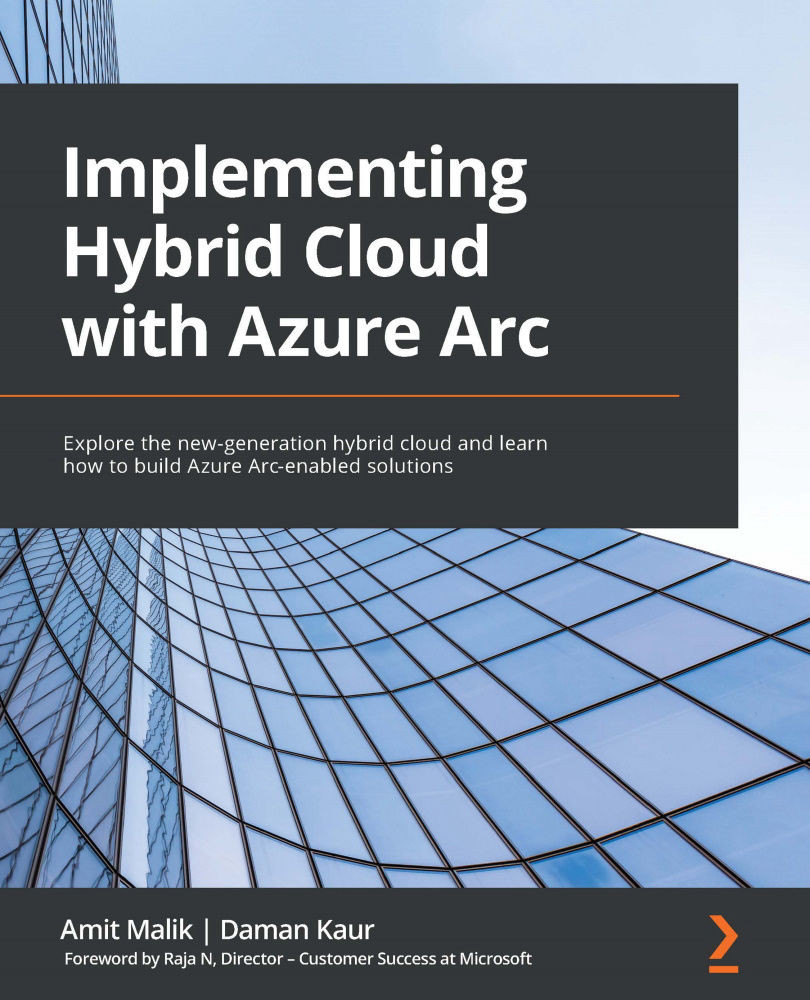
A practitioner's guide to designing, deploying, and governing hybrid and multi-cloud environments using Azure Arc. Covers Kubernetes integration, AI/ML pipelines, PaaS data services, and unified governance across on-premises and cloud infrastructure.
Written while building governance for hybrid and multi-cloud at enterprise scale — the same instinct now aimed at AI.
Whether you're a law firm exploring AI governance, an investor backing verifiable AI, or a partner or builder who wants to compare notes — I read every message. Law firms: book a pilot call and we'll run one of your real matters through the platform. You can also connect with me on LinkedIn.